This page may contain affiliate links, see our disclaimer here.
My Fairytale Cottage in the Woods
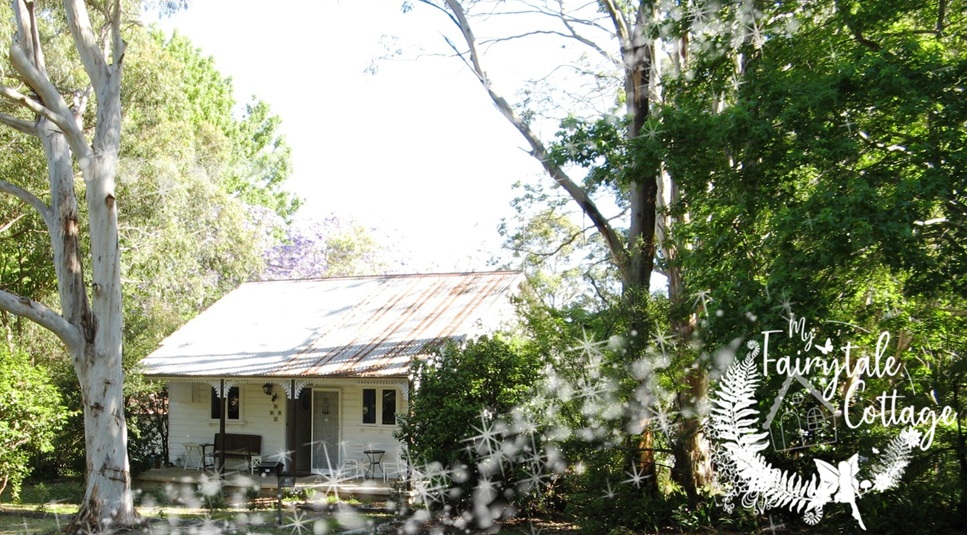
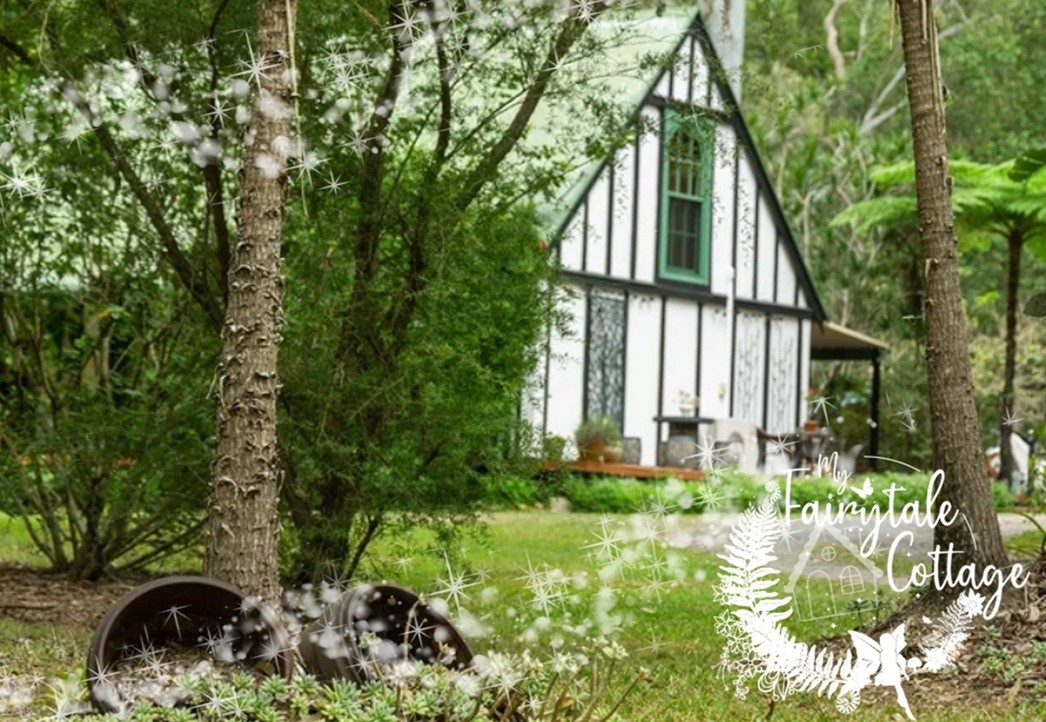
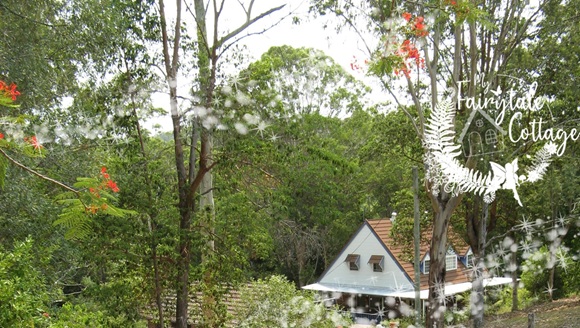
My Fairytale Cottage in the Woods is a collection of stories about our little patch of forest in Queensland, Australia and the ever present magic of the bushland, the garden, the rainforest and the animals, birds and other treasures I discover everyday.
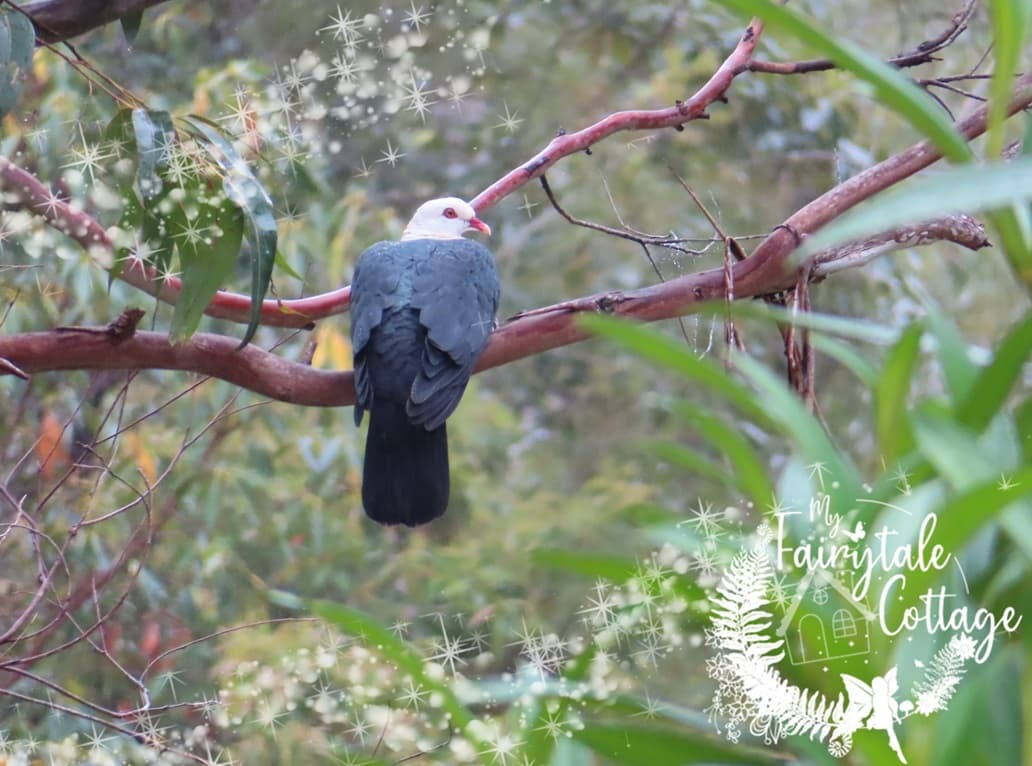
My Fairytale Cottage in the Woods - all about my fairytale cottage in the forest in Queensland, Australia. If you love nature, wildlife, conservation and gardening this will interest you. Sorry, this is not about our private life or inside our cottage. I love to share the magic of the evening light, the calls of the kookaburras, the beauty of the doves and other birds and stories about our ecological restoration of this patch. I have shared our travels here and all over this website, continuing my love of villages, cottages, nature, bushwalking, hiking and natural places.
Fairytale Cottage in the Woods - About the Forest
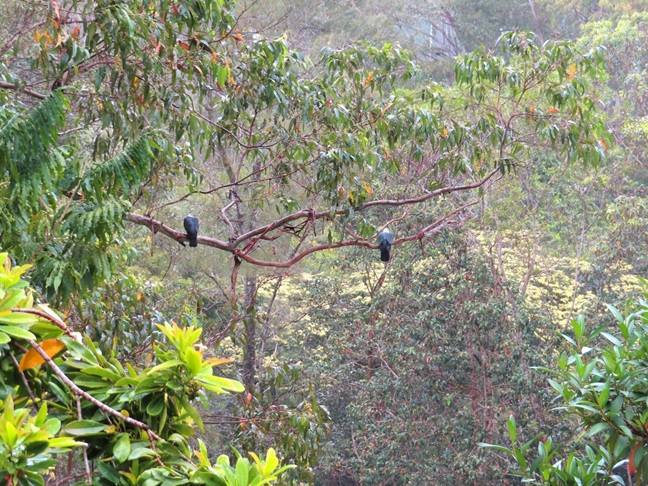
There is a lot of magic here. The magic of nature, the dance of the
light, myriad colours green to soothe the soul. Hundreds of lyrical
voices calling and singing; birds, insects and frogs day and night. Our
patch is partly open gum forest, partly sub-tropical rainforest and
partly a garden. It has an intermittent creek at the bottom of the
valley. The whole area was logged for timber and used for cattle and
banana plantations, so our forest is remnant forest, with no significant
old growth trees. There are some impressive tall gum trees, about forty years old, which grace us with their presence. The whole patch is a
bit isolated and invaded from all sides by weeds from neighbouring
gardens. Some patches of forest link up close by, and it is here that
the wallabies, kangaroos and koalas roam.
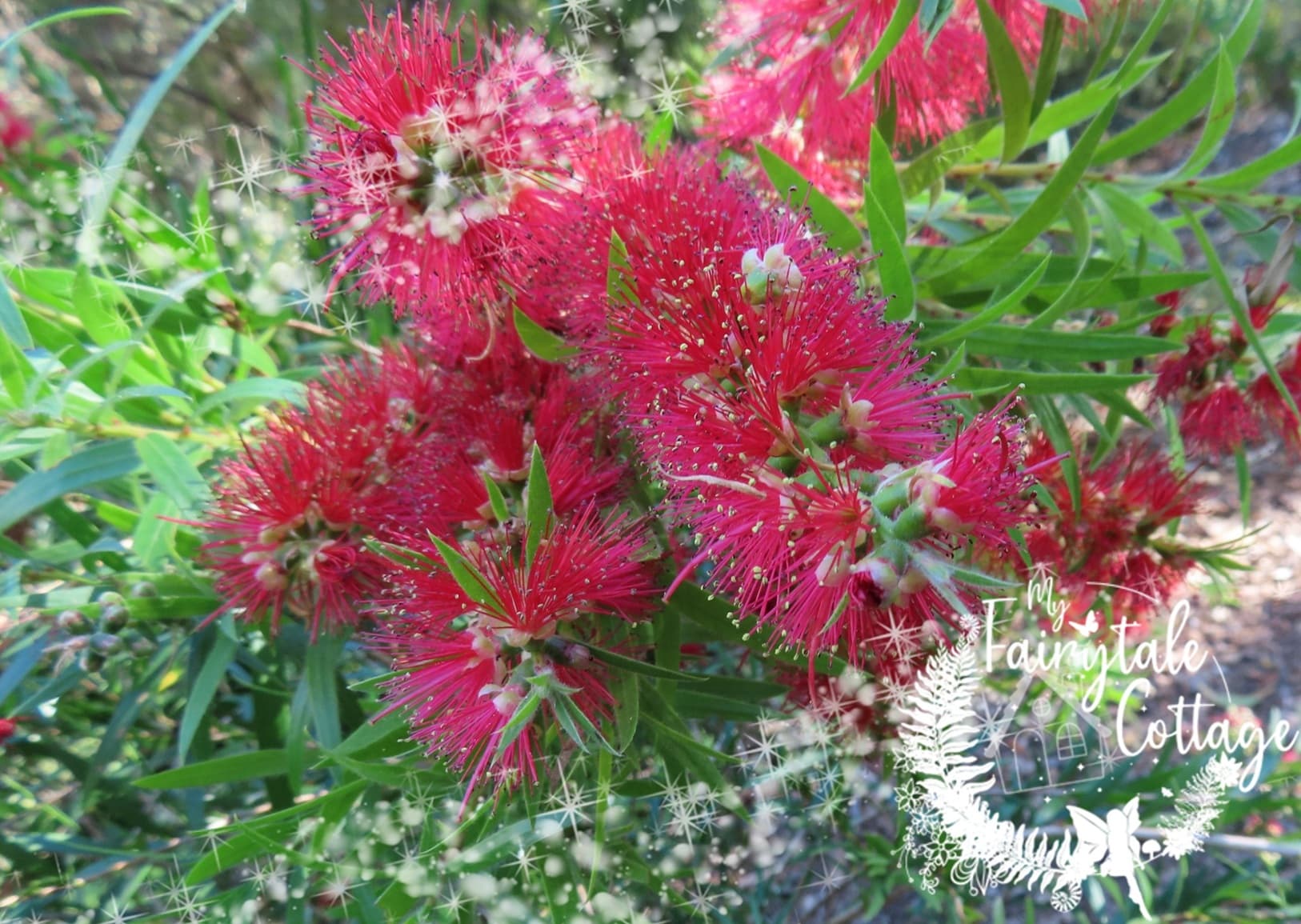
Fairytale Cottage in the Woods
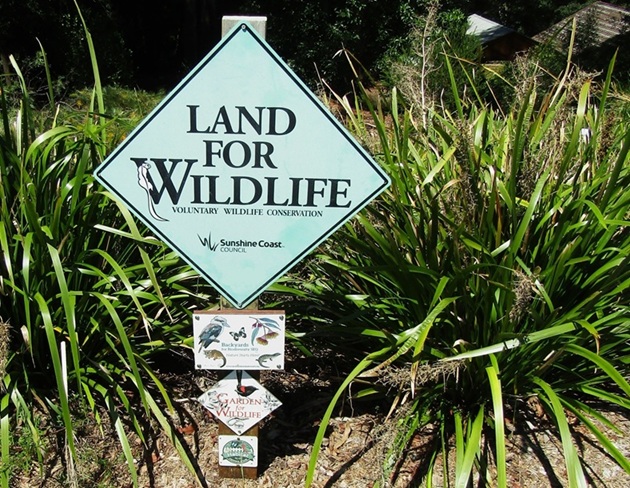
'Land for Wildlife'
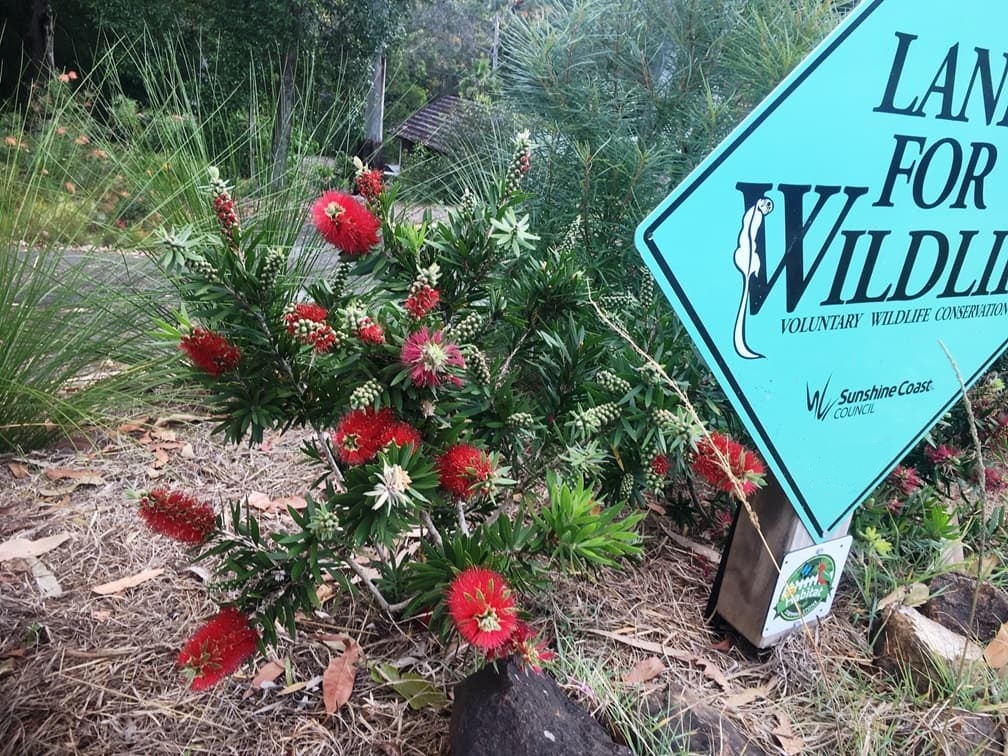
Here in our neighbourhood, the councils support land owners to manage the space ecologically, providing information, native saplings, ecological survey and opportunities to apply for grants for bush regeneration work, weed removal or erosion control. We have also been able to install three nest boxes on our property to provide homes for small birds, bats or larger animals.
Our journey has been a long one, at first we were rejected for the program and placed on a 'working towards' list, as the property did not have enough ecological balance, there was too much lawn and there were too many exotic plants. We almost met the criteria, but our weeds were an issue. We took this as encouragement rather than defeat, and set about transforming the land step by step. Cue lots of weed control, removal of exotic plants, and planting. We have planted natives, mulched and reduced our lawns, and controlled small patches of erosion, mostly with mulch and native grasses.
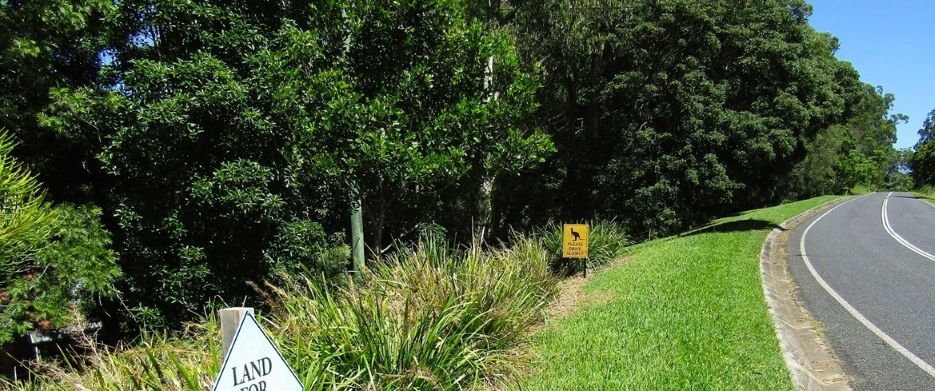
Our street sign lets drivers know to slow down for the wallabies and kangaroos. They are frequently hit by cars on this long stretch of road.
Fairytale Cottage in the Woods
Weeds, Seedlings and Regeneration
Weeds we have been a-weeding - we had a very impressive garden full of exotic plants left by the previous owner who was an artist and a keen gardener. Unfortunately, her love of colour meant that she had chosen to plant many invasive weeds, which we are still overcoming, ten years later.
The other weeds are regular weeds and environmental
weeds, which we have controlled with cardboard, mulch, hand-weeding,
fire wands, organic weed spray,
tears, sweat,
and triumph. The forest itself was starting to become weedy and overcome
by vines, so they have been mostly removed. Volunteers from 'Hinterland
Bushlinks' have helped, but most of it has been trial and error and a
lot of work.
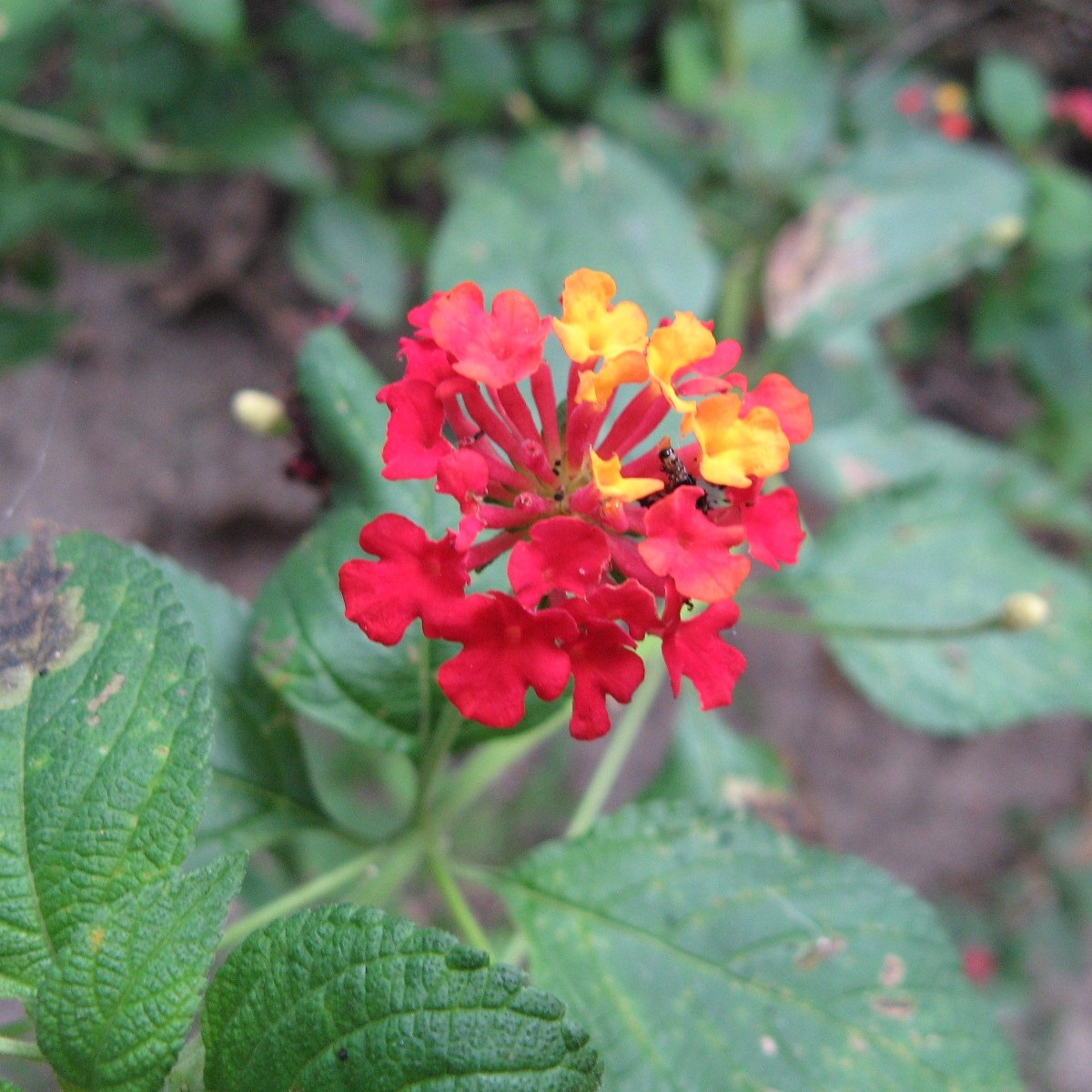 Lantana weed
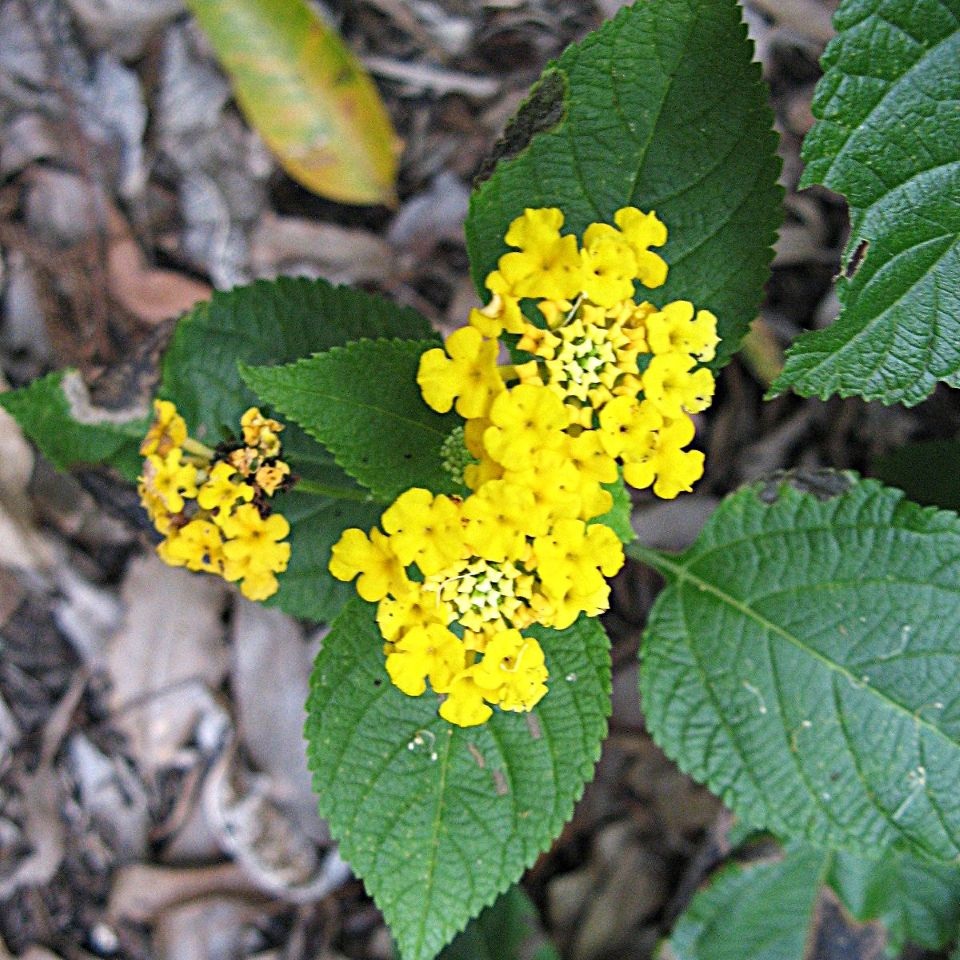 Lantana weed
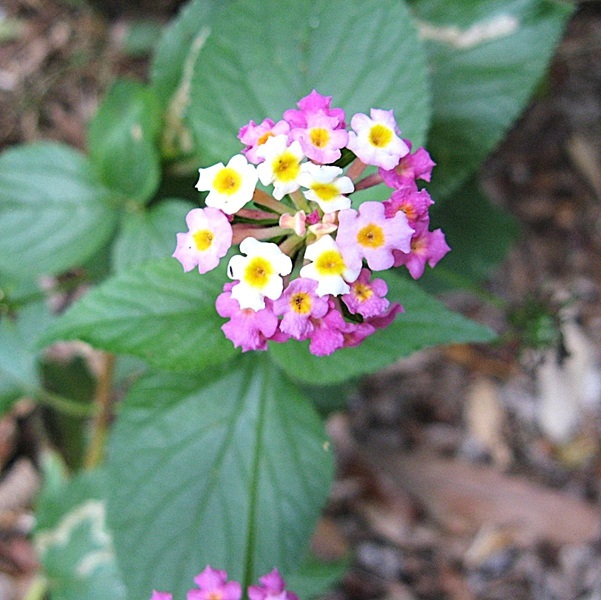 Lantana weed
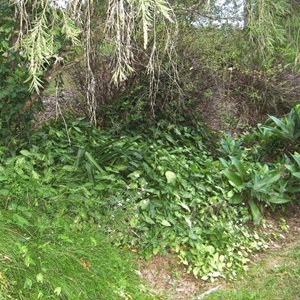 Arrowhead Vine weed
Our list is long, but here are the main culprits - these are the species that caused the most ecological imbalance on our land.
- Lantana - Lantana camara
- Camphor Laurel - Cinnamomum camphora
- Singapore Daisy - Sphagneticola trilobata
- Polkadot Plant - Hypoestes phyllostachya
- Trad - Tradescantia fluminensis
- Goatweed - Ageratum conyzoides
- Coral Creeper - Barleria repens
- Umbrella Tree - Heptapleurum actinophyllum
- Asparagus Fern - Asparagus aethiopicus
- Arrowhead Vine - Syngonium podophyllum
- Fishbone Fern - Nephrolepis cordifolia
- Easter Cassia - Senna pendula
The reason that these are weeds or environmental and seriously invasive weeds is that they create imbalance in the natural local ecosystem, dominate other plants or smother them, and they do not create habitat for local insects, mammals or birds. Not to mention the fairies.
Fairytale Cottage in the Woods
Exotic Plant Removal
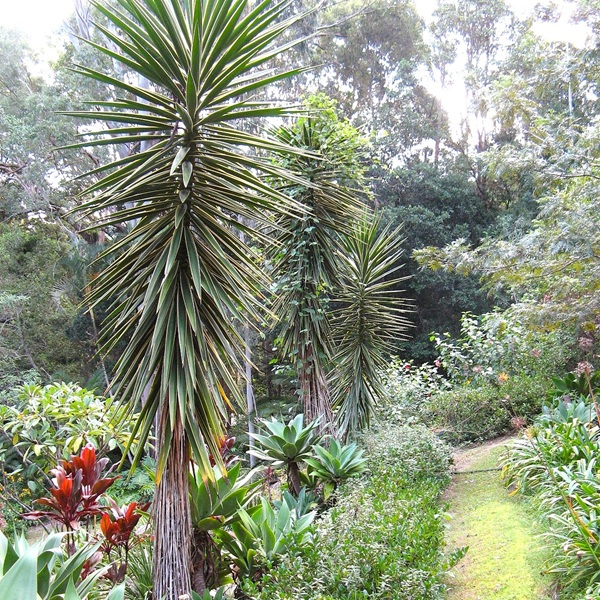 Yukkas and agaves
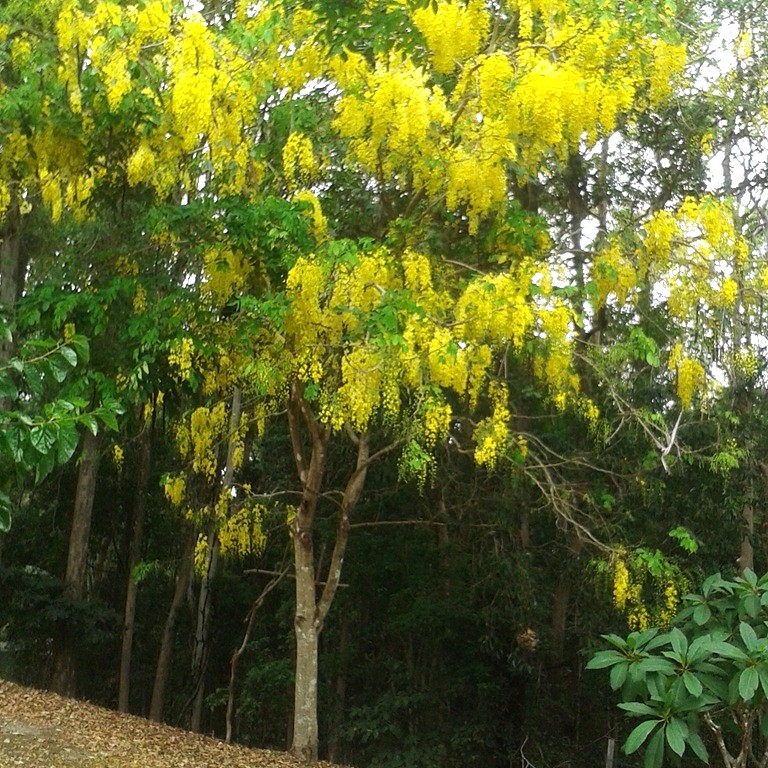 Golden Shower Tree - Cassia fistula
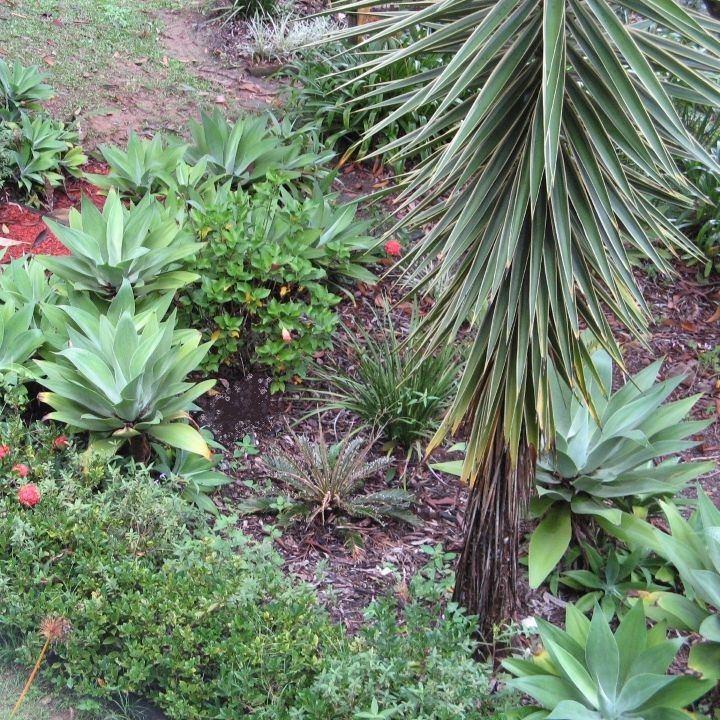 Yukkas and agaves
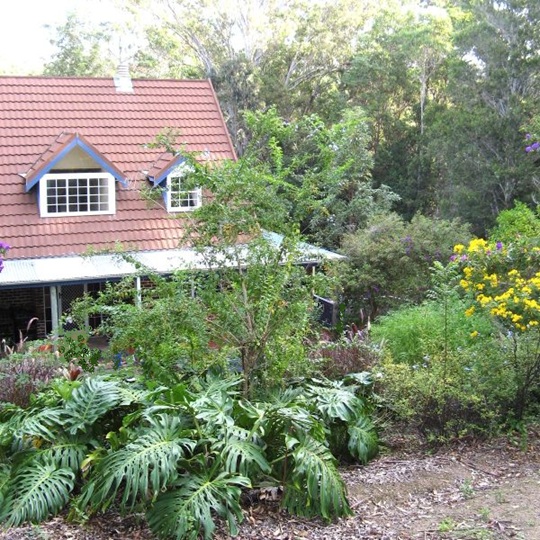 Swiss Cheese Plant - Monstera deliciosa and Easter Cassia
Our mix of exotic plants was no less daunting. Most have been removed now after ten years of careful attention. Here is the list of plants removed and controlled.
|
|
Planting Native Provenance Species
Native plants we have been a-planting - one of the most valuable pieces of information we received from our 'Land for Wildlife' ecologist was a list of native plant species. This was not just any list, but a list of provenance species, meaning those that belong in this particular forest. This added to our existing knowledge of natives, and we have been able to incorporate plants here that grow easily in this soil and climate.
Here is our bird garden before we started working on it.
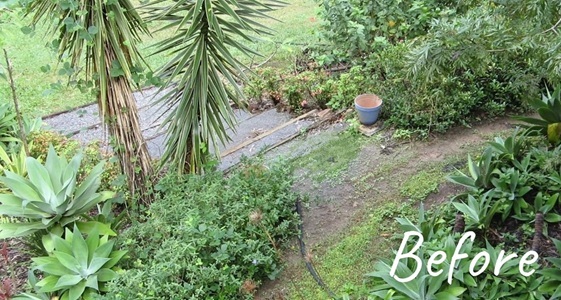 Bird Garden before Work
Here is our bird garden with all weeds and exotic species removed, native species planted and a thick layer of mulch to stop weeds returning.
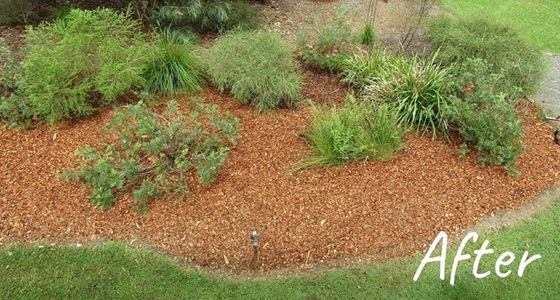 The Bird Garden after Work
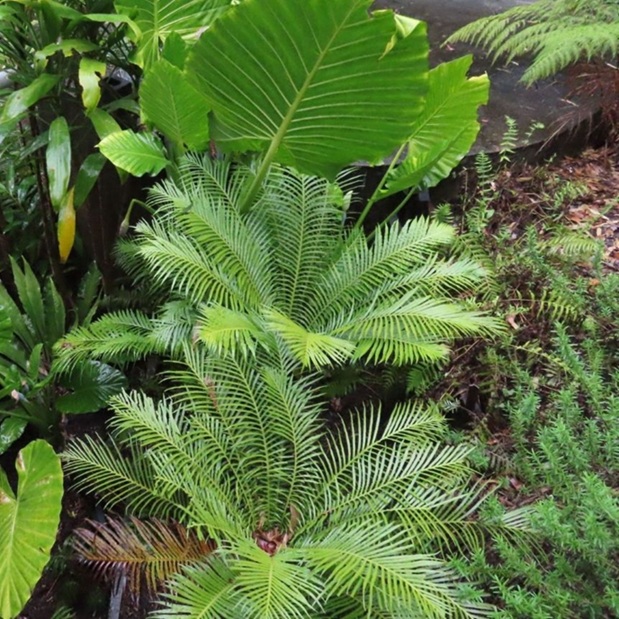 Silver Lady Ferns and Cunjevoi
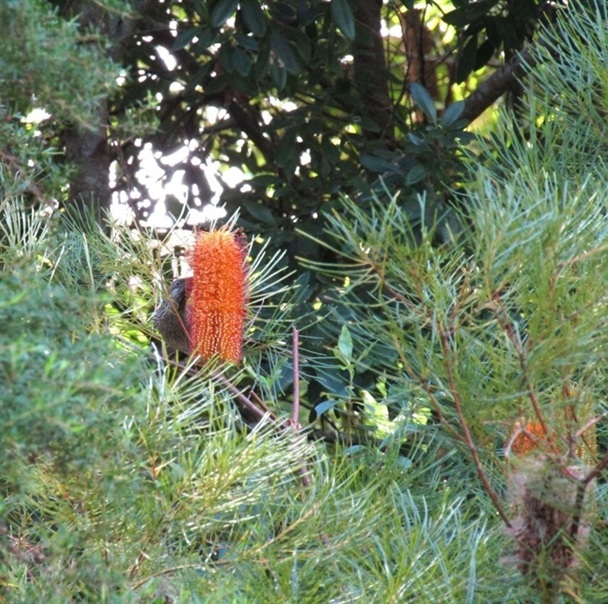 Hairpin Banksia
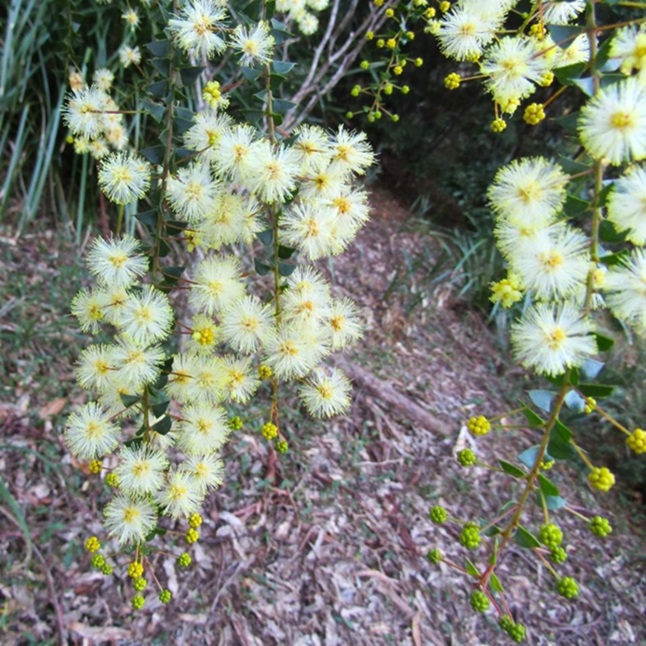 Prickly Leaved Wattle
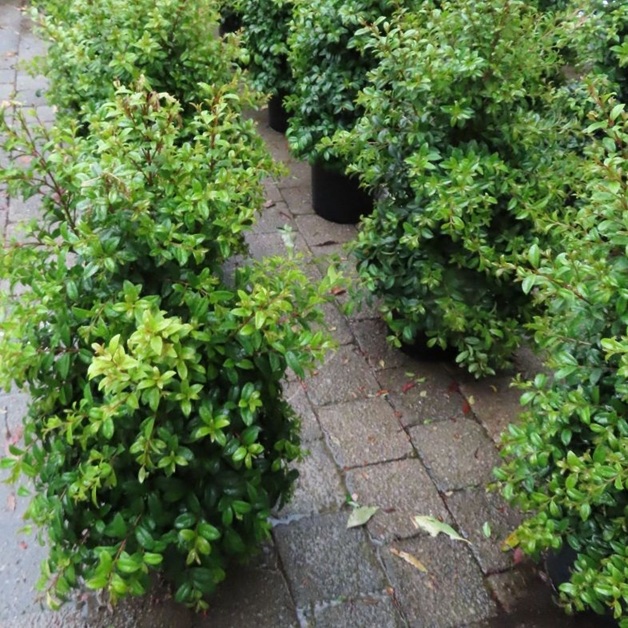 Little Lilly Pillys
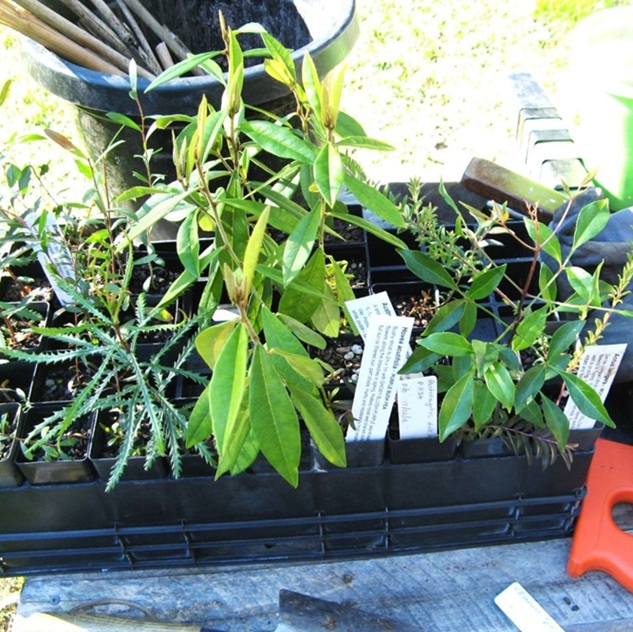 New seedlings
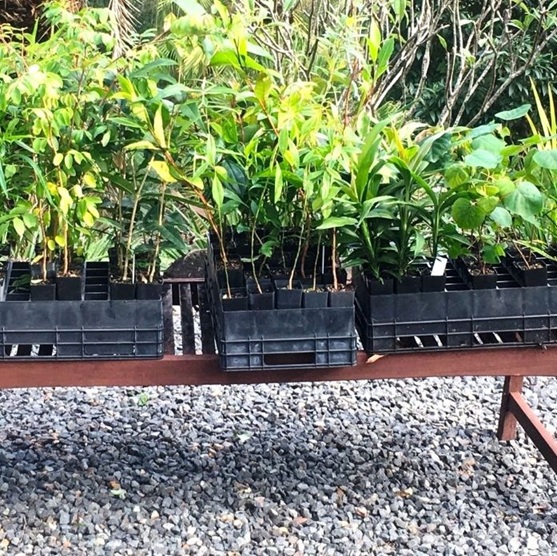 New seedlings
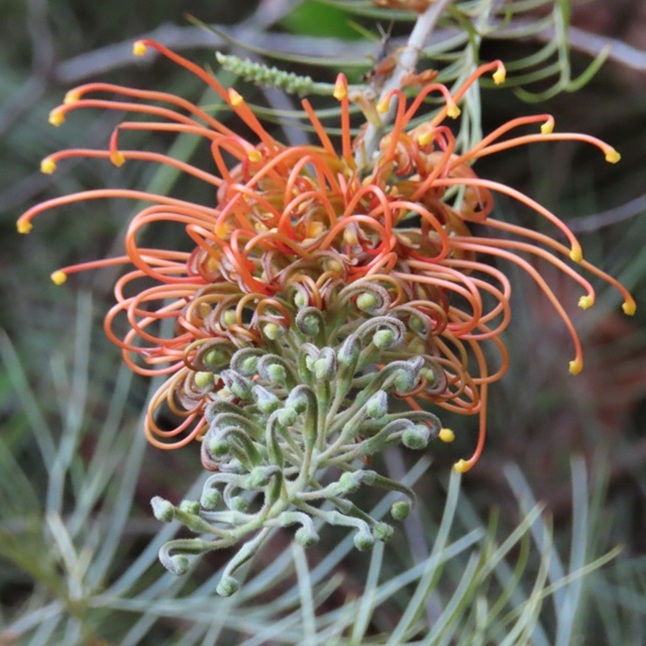 Grevillea
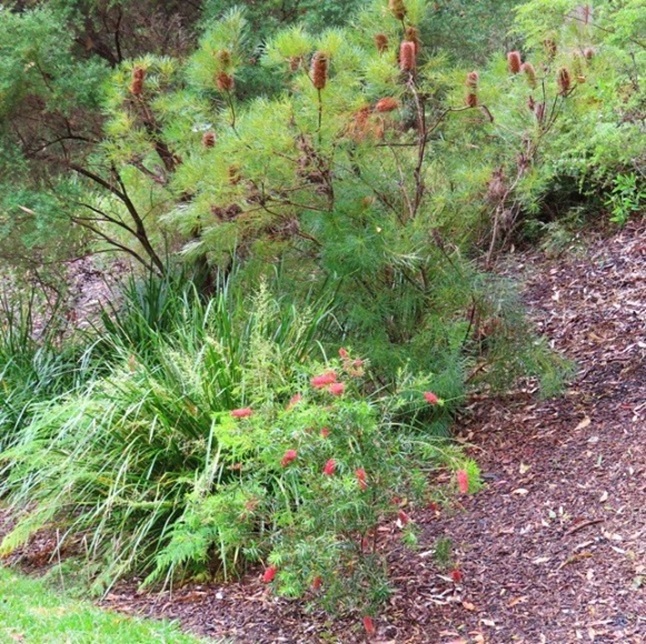 Banksia, Tea Tree, Bottlebrush, Lomandras
Our native planting list is long, here are some of the magical species that make up our thriving ecological community now.
Trees
Brushbox - Lophostemon confertus - * Koala habitat tree
Red Gum - Eucalyptus tereticornis - * Koala food tree
Flooded Gum - Eucalyptus grandis - * Koala food tree
Paperbark Tree - Melaleuca quinquenervia
Tuckeroo - Cupaniopsis anacardioides
Eumundii Tree - Elaeocarpus eumundii
Flame Tree - Brachychiton acerifolius
Fire Wheel Tree - Stenocarpus sinuatus
Silky Oak Tree - Grevillea robusta
Red Bottlebrush - Melaleuca citrina
Golden Penda - Xanthostemon chrysanthus
Native Frangipani - Hymenosporum flavum
Macaranga - Macaranga tanarius
Celery Wood - Polyscias elegans
She-oak Tree - Casuarina glauca
Shrubs
Little Bottlebrush- Callistemon Little John
Banksia - Banksia ericifolia
Lilly Pilly - Syzygium australe
Lilly Pilly - Syzygium leuhmanii
Prickly Moses - Acacia hubbardiana
Midgen Berry Bush - Austromyrtus dulcis
Purple Pea Bush - Hovea acutifolia
Banana Bush - Tabernaemontana pandacaqui
Native Holly - Graptophyllum ilicifolium
Grevillea bushes - Grevillea Robyn Gordon and others
Honey Myrtle - Melaleuca thymifolia
Rice Flower - Ozothamnus diosmifolius
Ground Covers, Ferns and Grasses
Grevillea 'Amber Blaze'
Grevillea 'Golden Lyre'
Native Violets - Viola hederacea
Knobby club rush - Ficinia nodosa
Lomandra Grass - Lomandra histrix
Soft Fern - Christella dentata
Saw-sedge Grass - Gahnia clarkei
Tree Fern - Cyathea cooperi
Birds Nest Fern - Asplenium australasicum
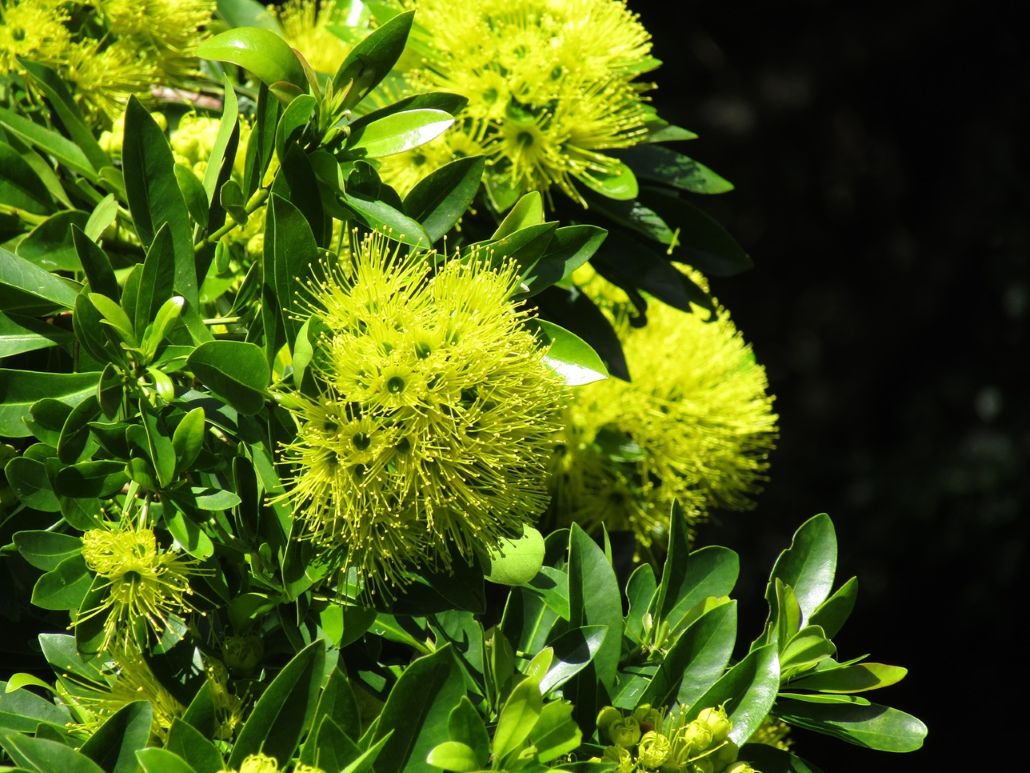 Golden Penda Flowers
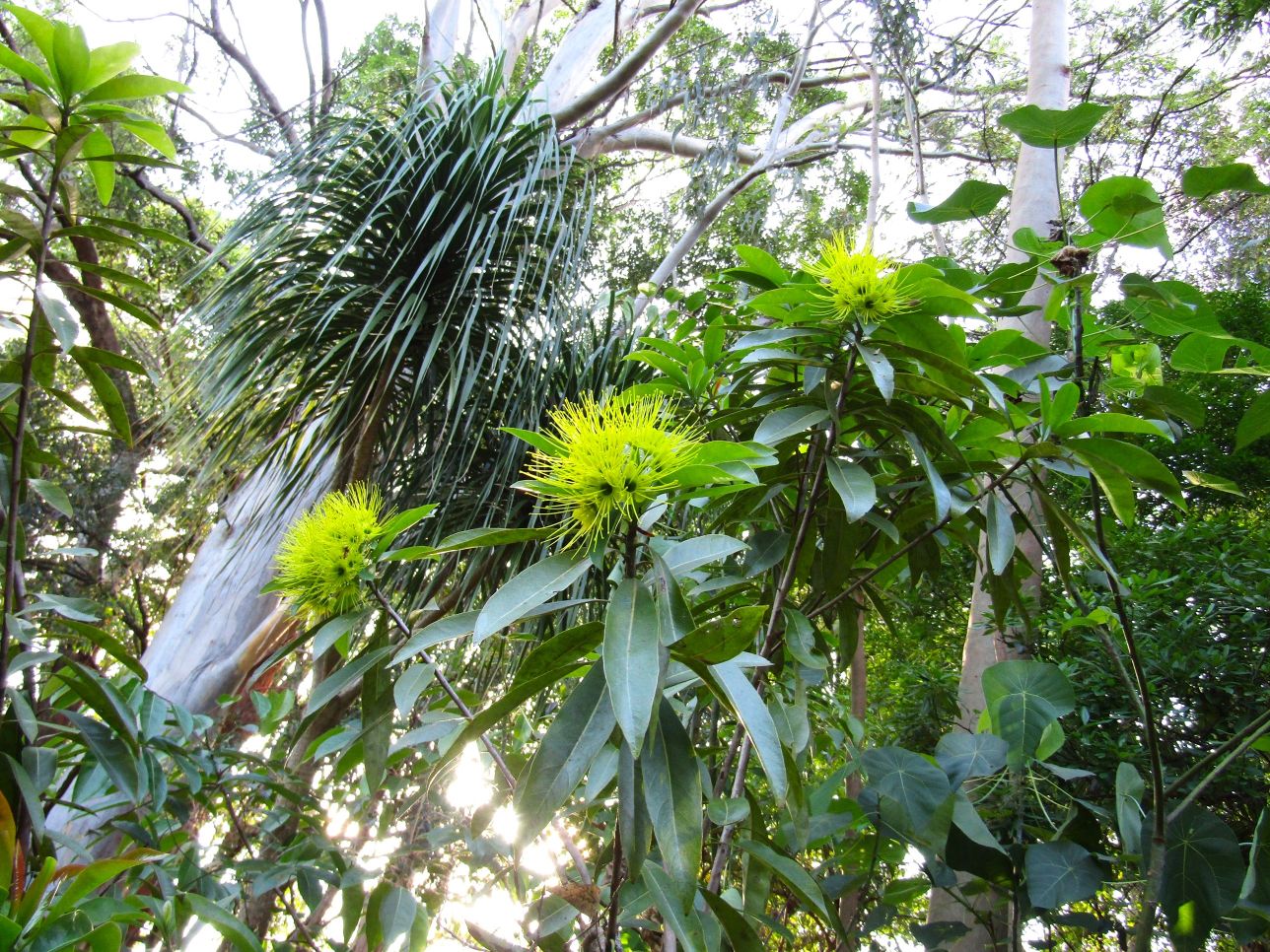 Golden Penda in the Forest
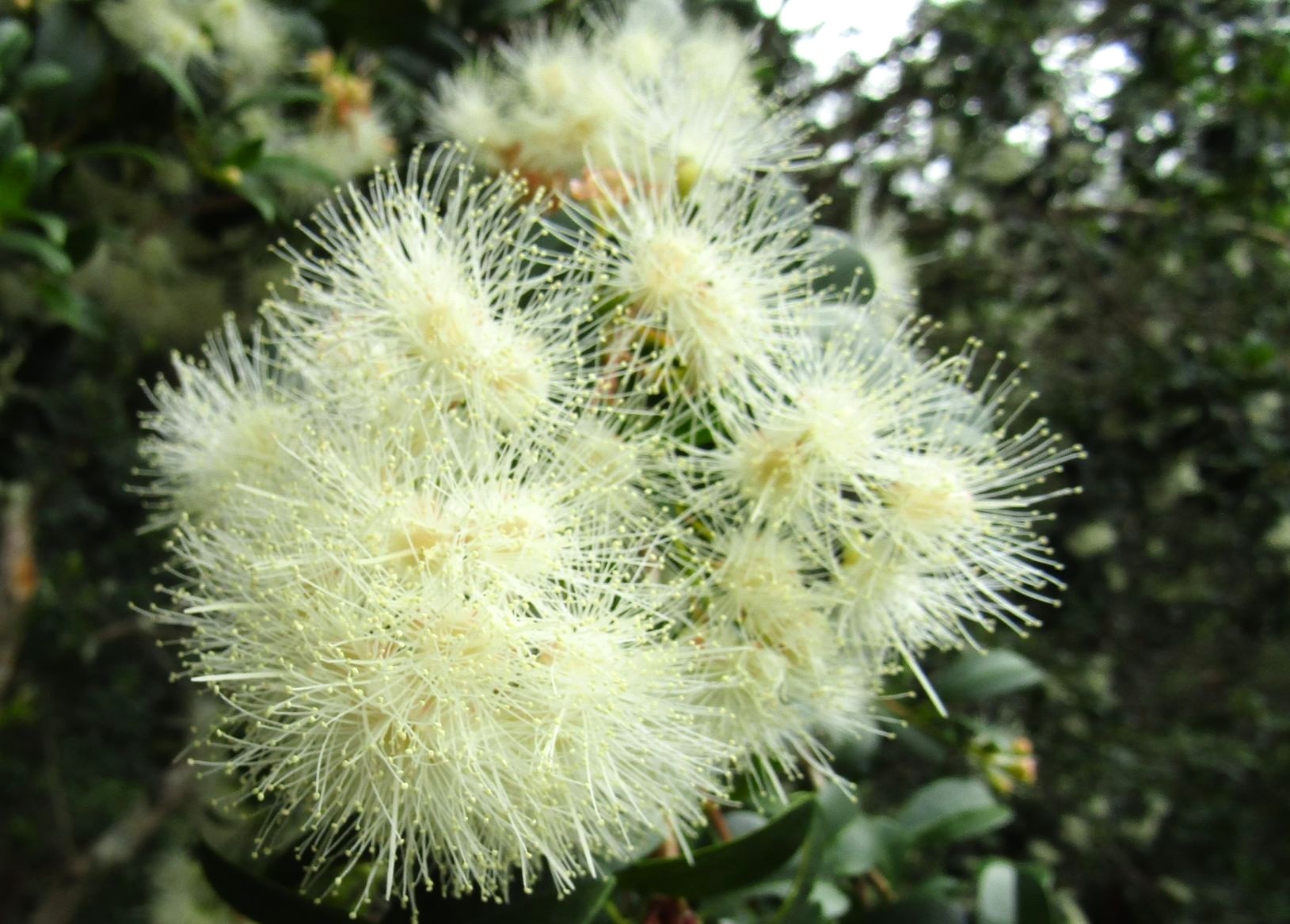 Lilly Pilly Flowers
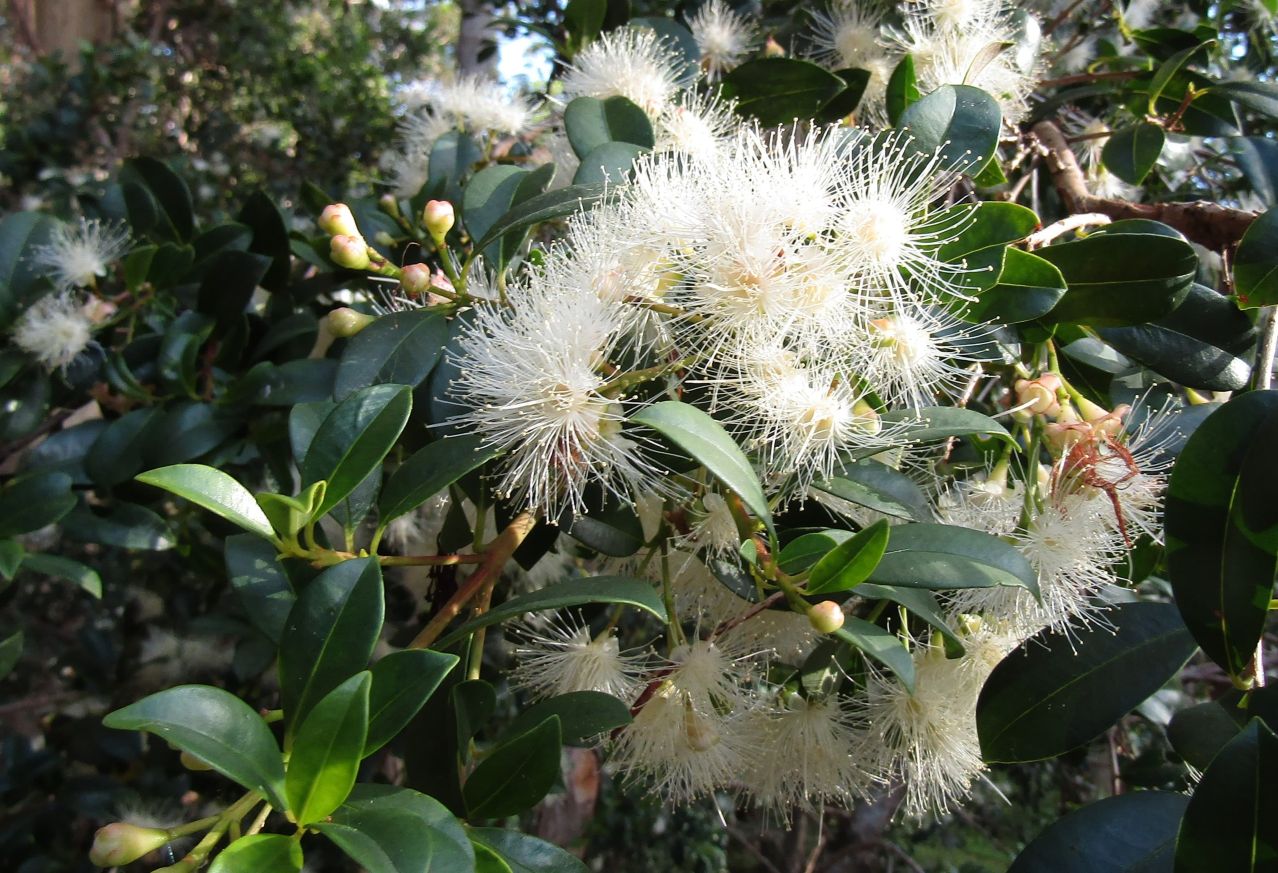 Lilly Pilly Flowering
Bush Regeneration
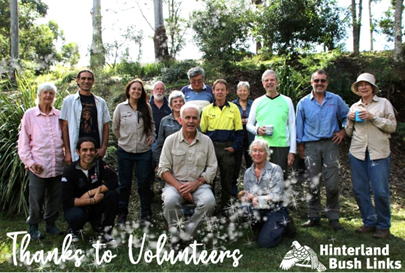
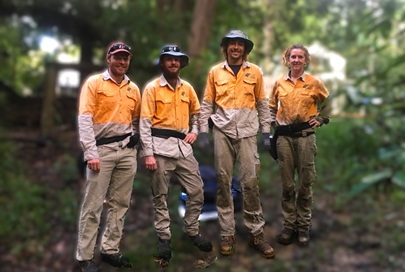
Thanks to the Land for Wildlife program and all of our knowledge from working in bush regeneration in our twenties, as well as the contributions of volunteers from Hinterland Bush Links and from paid bush regenerators, we have made a significant impact on the bush here on our patch. The ecosystem is healthy and the wallabies, kangaroos and other wildlife love it. We have natural regeneration happening now, where native saplings are self-seeding and covering weedy patches, making a healthy vibrant community. It still keeps us busy, we love it and we are grateful for this healthy, magical place. This is where the enchanting ferns now flourish, the fairies dance, the mushrooms shroom and the birds sing.
About the Trees
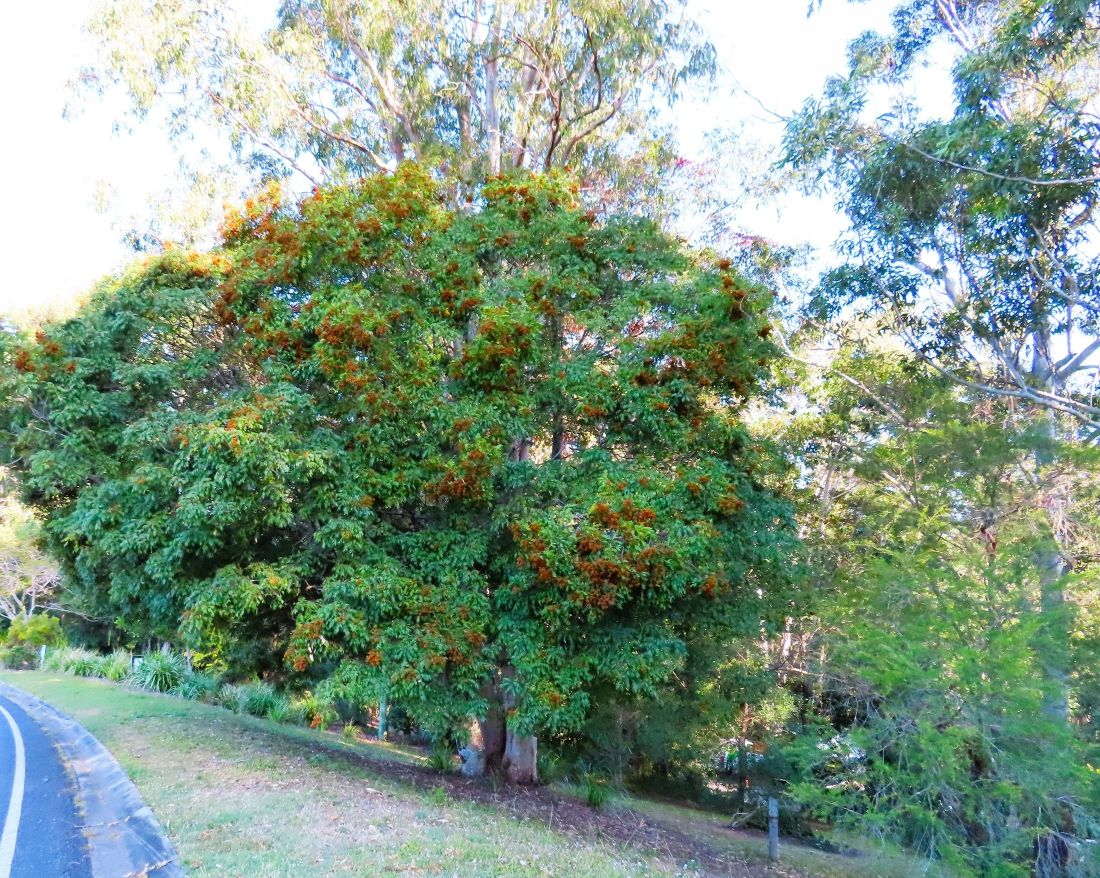
The Jagera Tree
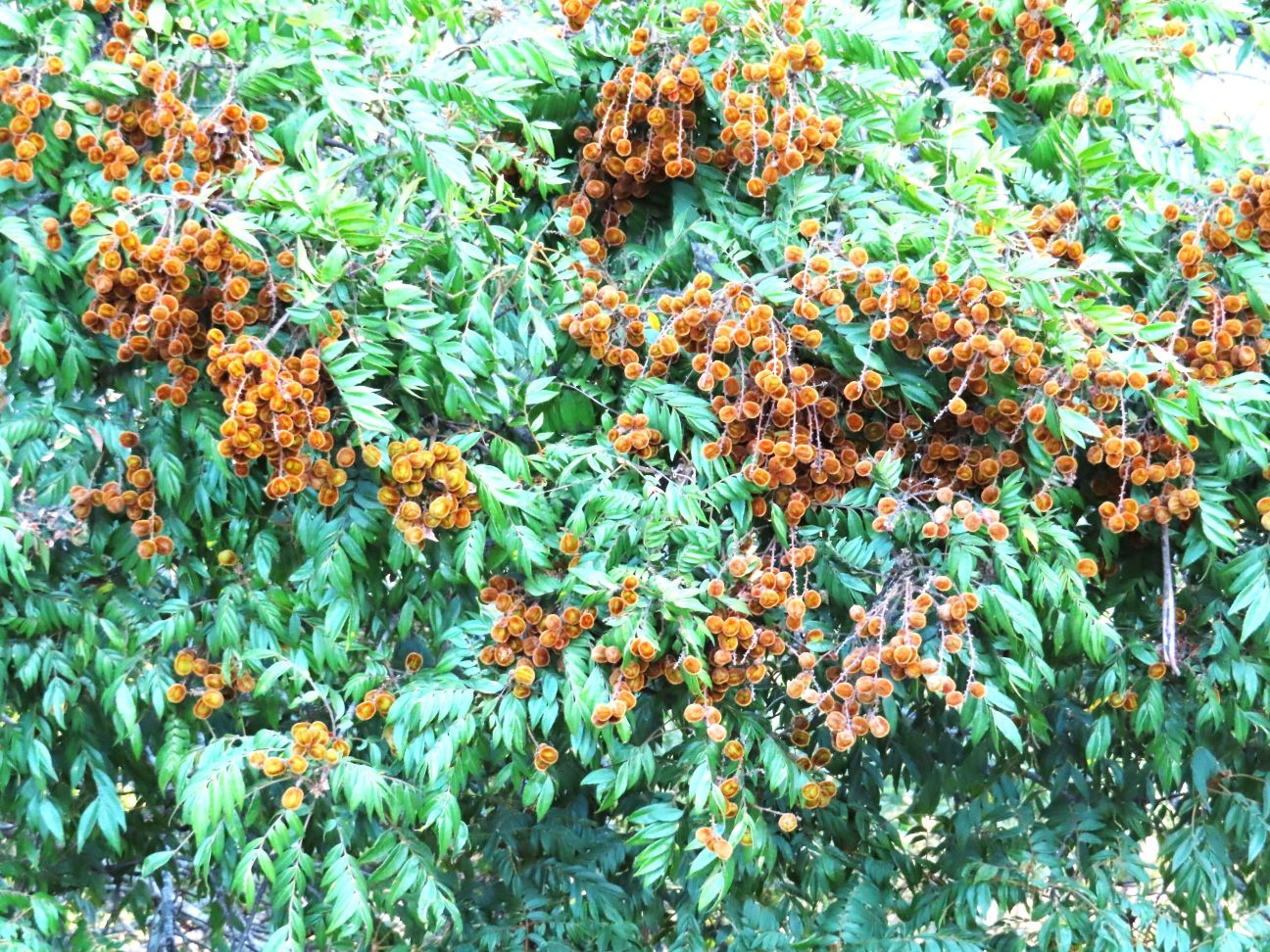
The Jagera sits proudly at the topmost point of our land, its trunk
entwined with two gum trees, and its branches spreading beautifully
across the nature strip and over the road. Jagera pseudorhus is
a native Australian subtropical and tropical rainforest tree, which
often grows on the edges of rehabilitating forests. It has soft delicate
ferny leaves, lovely brown tips and flowers and stunning round brown
fruit balls. It grows to 15 metres and our birds love it. The fig birds,
oriole, the magpies and the lorikeets all frequent the tree. We have
other Jagera trees growing around the property and have become adept at
recognising the seedlings as they self-seed around the land and in the
forest.
Lilly Pilly Pom Poms
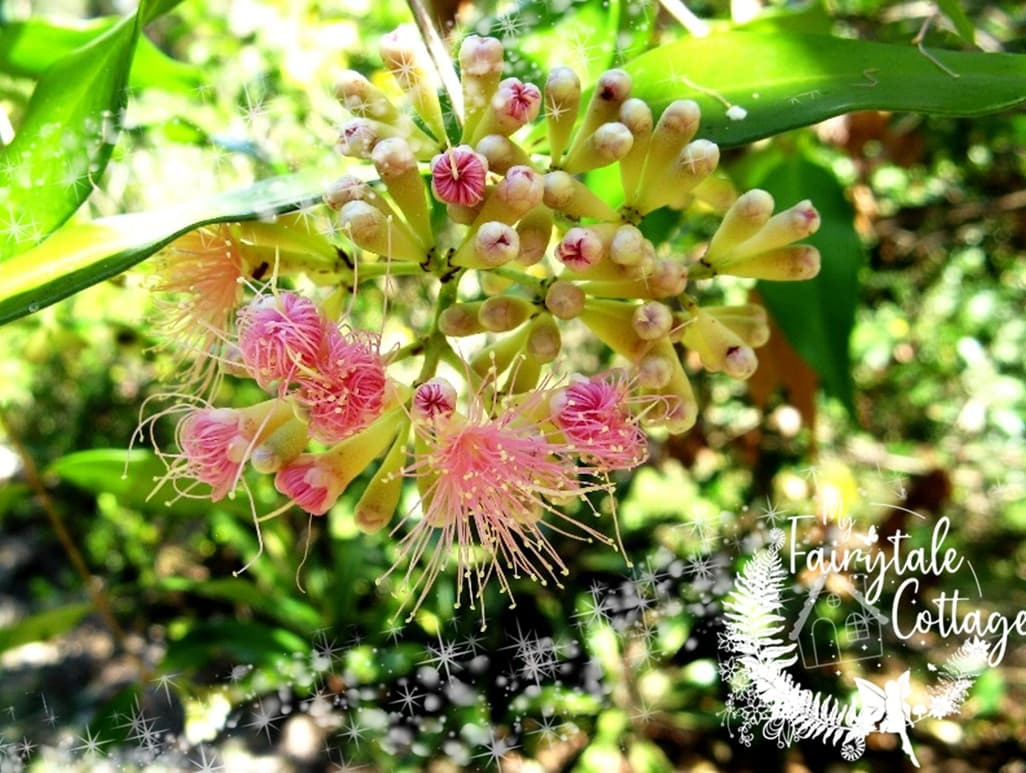
This Lilly Pilly is home to flitting wrens, the ever present Lewin's Honeyeater, fast little Dusky Honeyeaters, our possum and many others. It flowers with luminous light pink pom poms and creates a wealth of fruit. Syzygium Leuhmannii is a weeping form of Lilly Pilly with beautiful rose-pink leaf tips.
Fairytale Cottage in the Woods - Our Birds
We are so grateful for the abundant bird life in our forest and gardens. We never feed birds, we have just focused on creating a rich ecosystem in which they can thrive. And they do thrive. We are lucky to have high gum trees, full canopy forest as well as open woodland and gardens for a wide range of different species to live and visit. Here are just a few which keep me busy with sightings, loving their antics, their never ending fascinating behaviour, beauty and always, always trying to capture their brilliance with my camera.
Some notable visitors at our Fairytale Cottage in the Woods are Crows, Yellow-Tailed Black Cockatoos, Crested Falcons, Noisy Bastards otherwise known as Channel-billed Cuckoos, Rainbow Bee-eaters and Sulfur-crested Cockatoos. Here are just a few of our favourites.
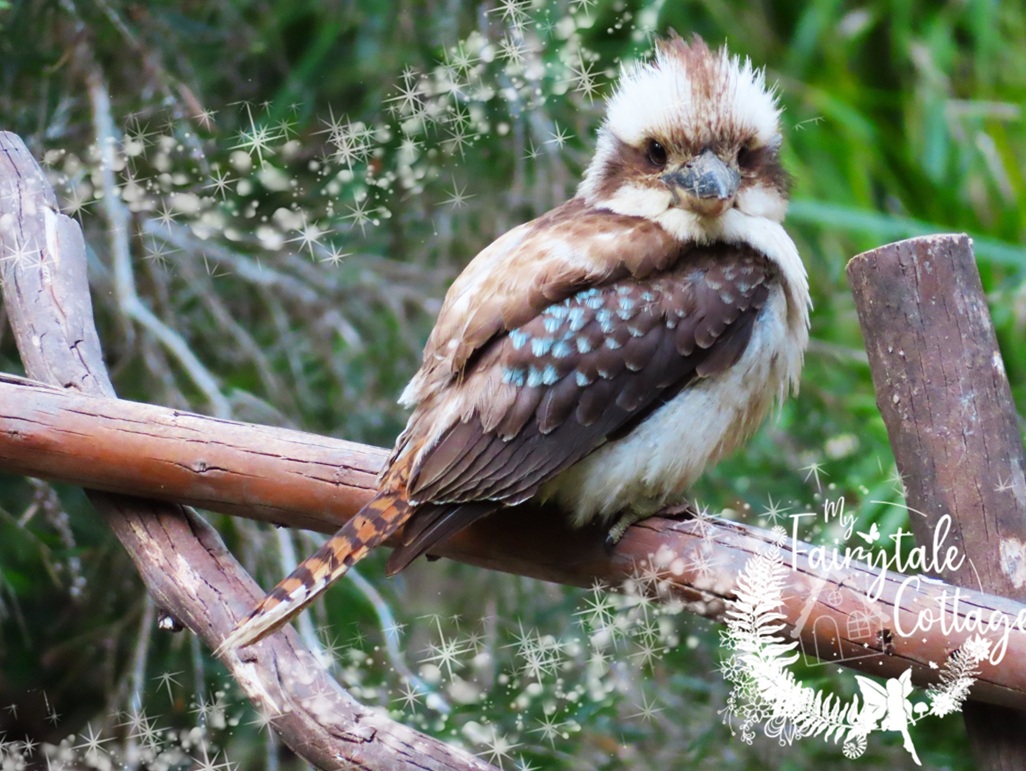
Laughing Kookaburra
The Kookaburra family dominates our land, they are ever present, fierce hunters with powerful beaks. They also love to laugh, singing their communal song on the gum trees over our cottage in the mornings and late afternoons. When we work in the garden they stay close, catching bugs uncovered in the mulch. They bring their young to visit and learn, relax on the timber arbour over our lawn, and catch worms in the soft green expanse. Easy pickin's.
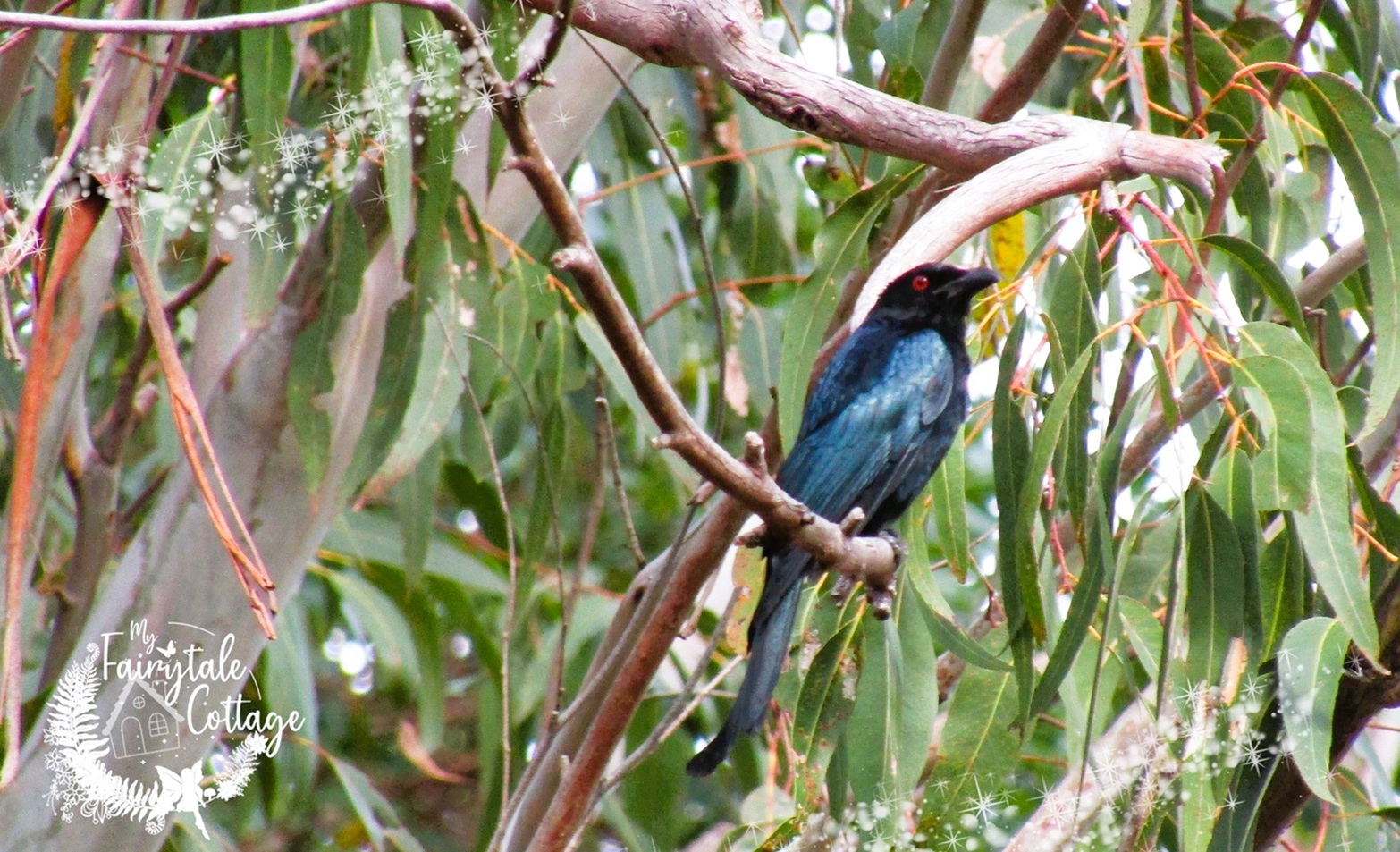
Spangled Drongo
One of the characters of the Australian bush, this bird is one of my favourites and we are lucky to have many happy families here in our forest. They do behave like nutters, their call cannot be described, their flight is magnificent and their whale tale unique. I have enjoyed many hours of their company trying to capture their character and beauty, but alas they have outmaneuvered me. Until next spring.
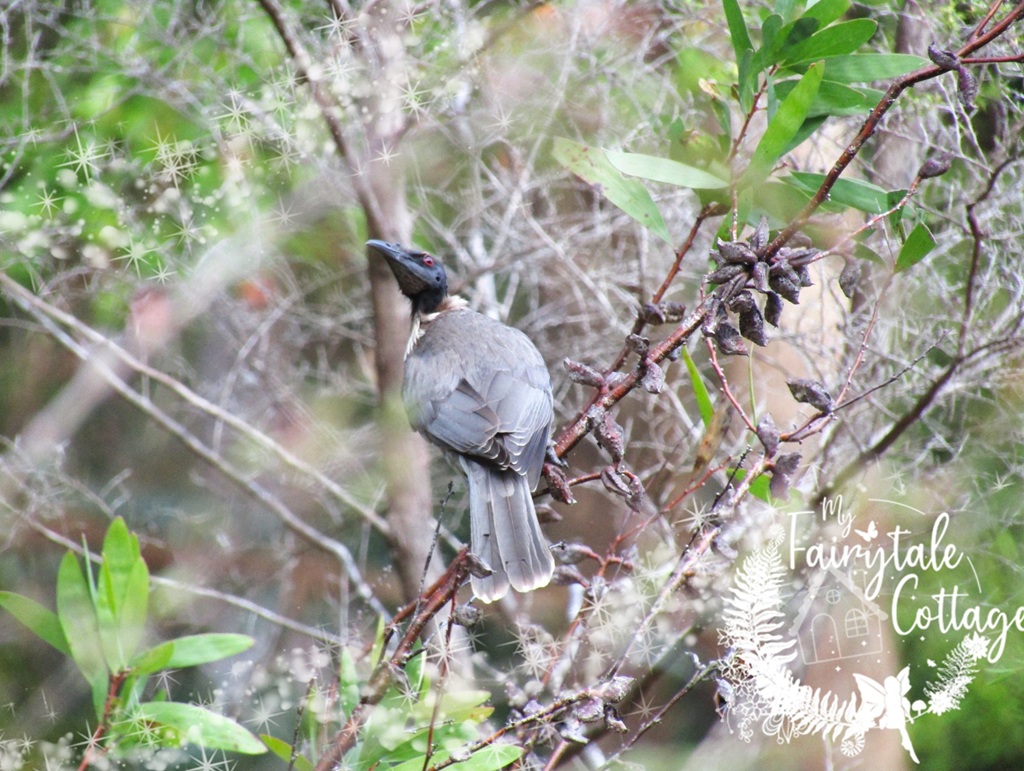
Noisy Friar Bird
These guys are noisy, and their naked head gives them the look of a medieval monk. They are nectar feeders, and they live close to us, building a flimsy nest on a low branch. Ever watchful, they have a melodious chatter to call out to each other about delicious food, and can be seen regularly on our grevilleas.
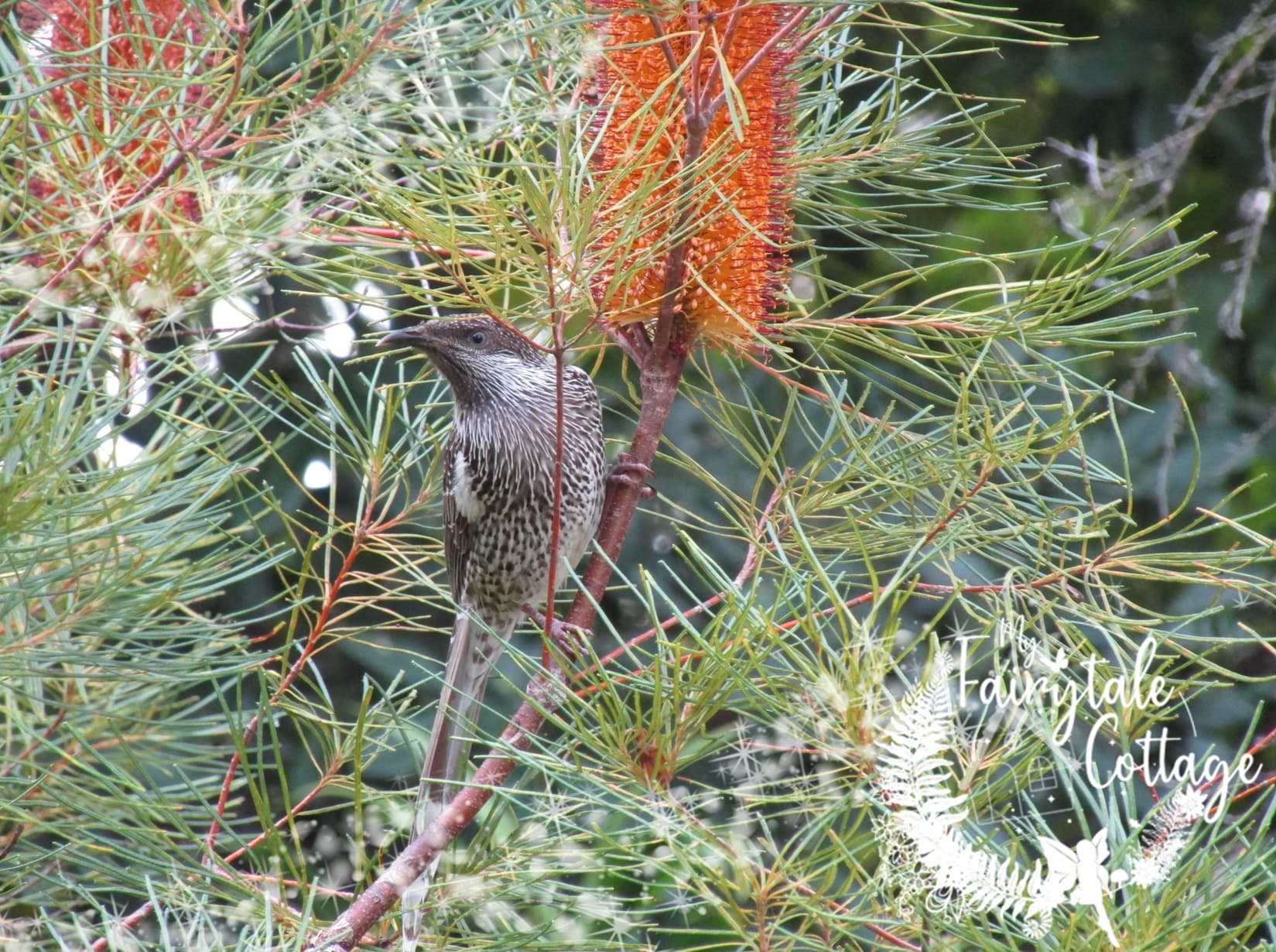
Little Wattle Bird
This sweet wattle bird is a bit smaller than its cousins and has a distinctive call. She has appeared in the last few years, now that our banksia trees are a bit bigger and provide good habitat for her. In this photo she is just metres from our front door, in the Banksia spinulosa, Hairpin Banksia, calling to her mate in the morning light.
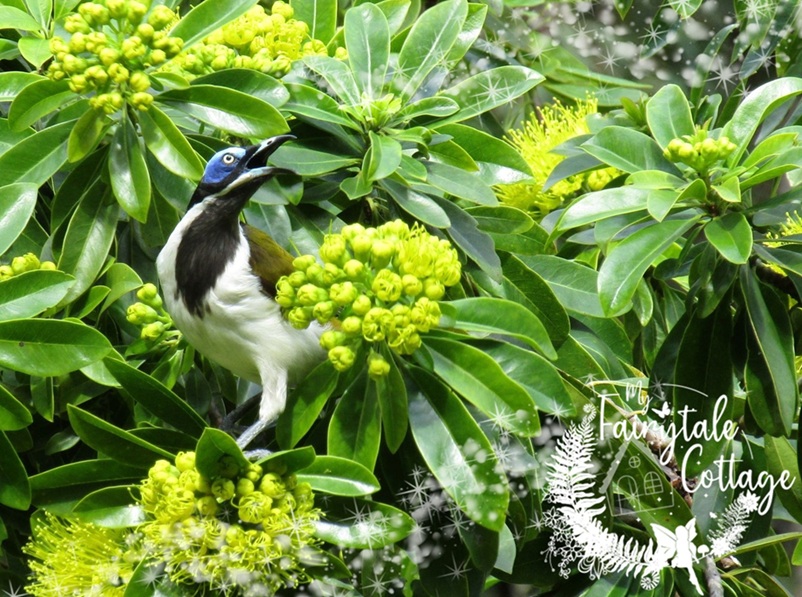
Blue-faced Honeyeater
A clan of these noisy social birds live with us, into everything, squawking and fussing, flitting from the Bottlebrush to the Golden Penda, up to the Jagera Tree and down to the Fig Tree. They always have to know the latest news, keep together and feel like they are missing out unless they are hangin' with their gang.
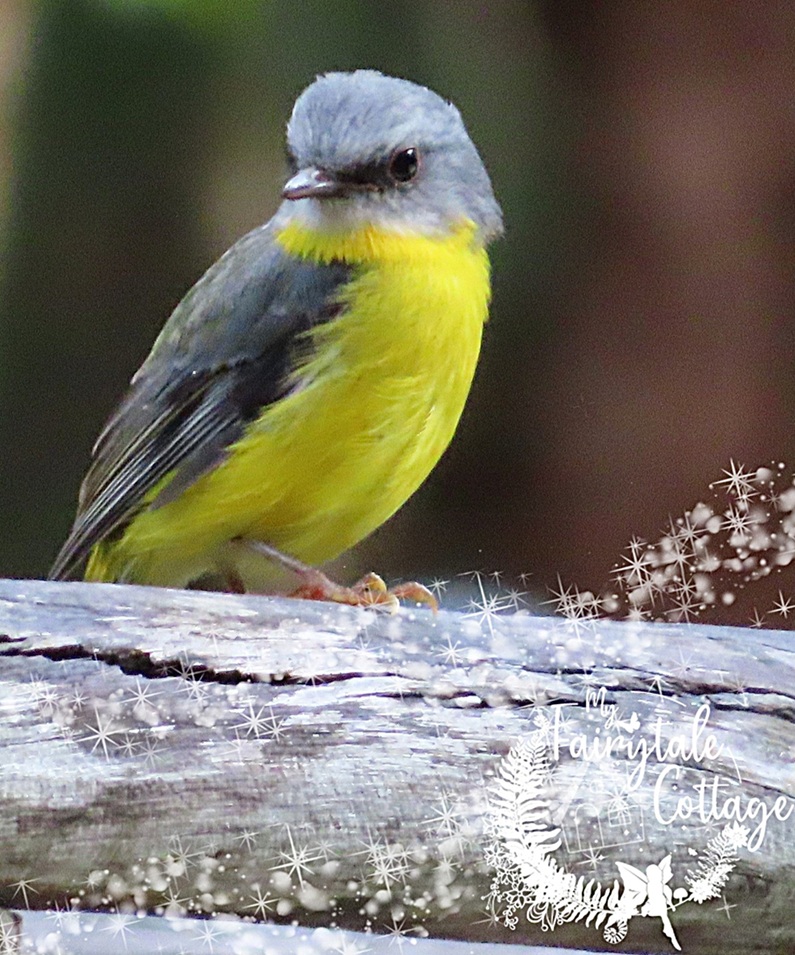
Eastern Yellow Robin
Families of yellow robins live with us here at the cottage. They hunt in groups and watch us with their curious eyes, heads tilted sideways. They flutter to the ground, grab a little worm, then flit to a small sapling trunk, landing sideways. Their liquid calls adorn the evening. These birds always remind me that the spirit of my mother is near, as she was named Robin, after the bird.
Our Terrific Tawny Frogmouth Family
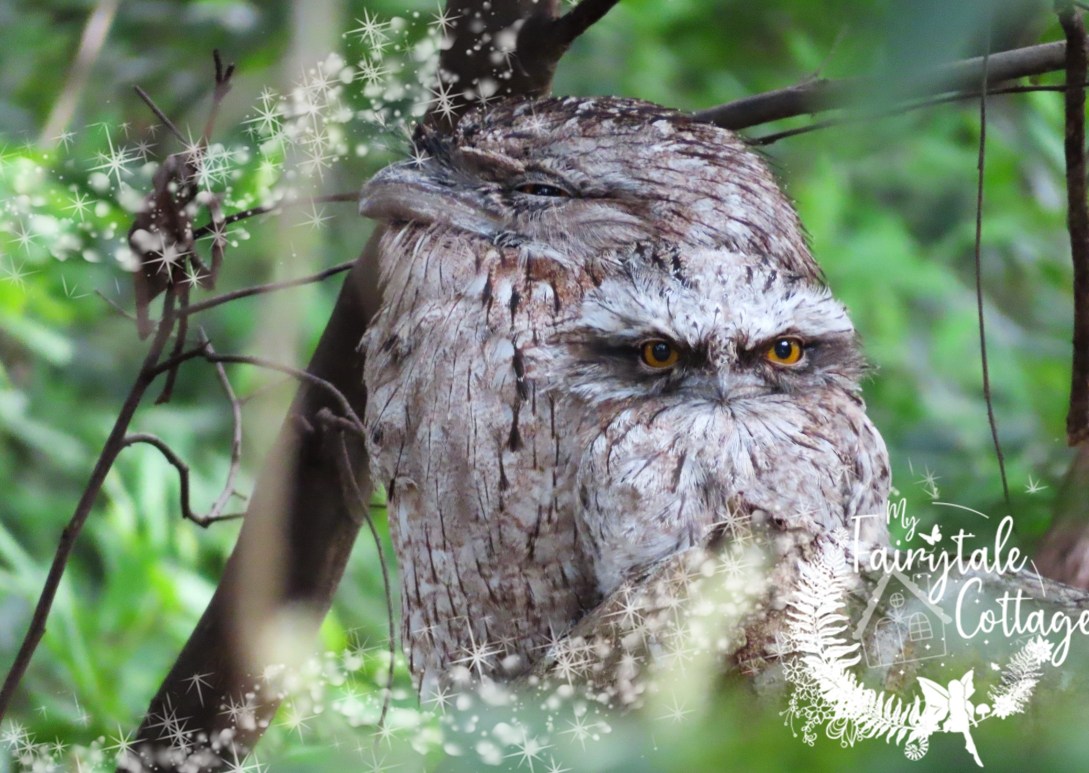
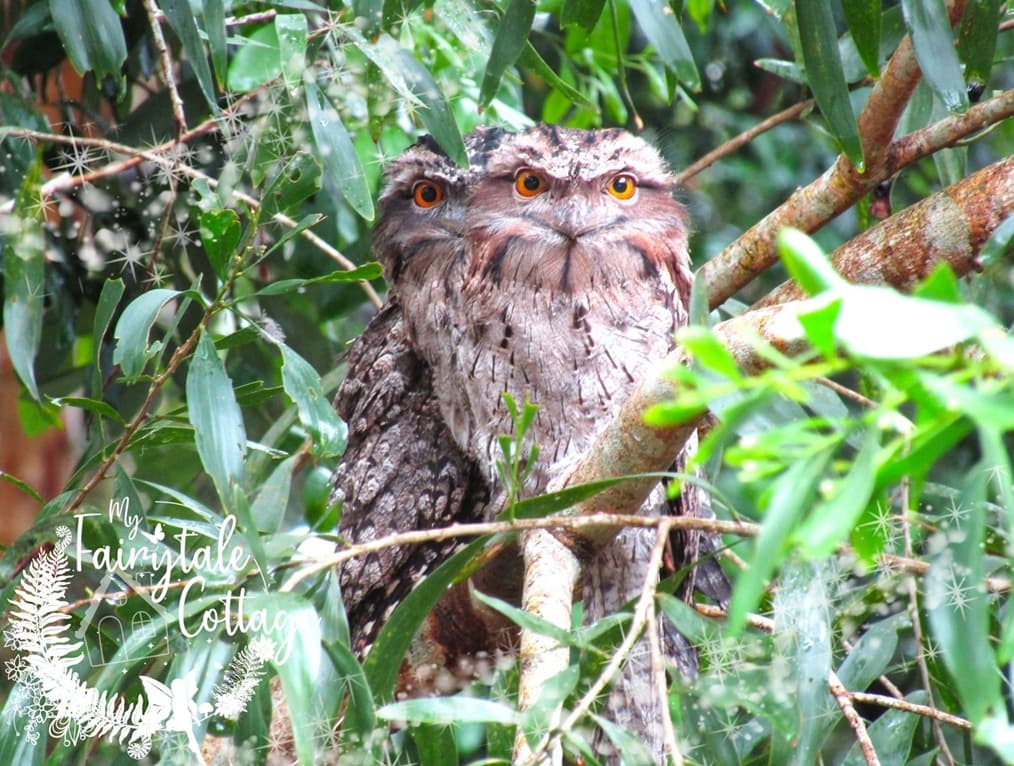
Fairytale Cottage in the Woods - our Tawny Frogmouths have lived here for many years and each summer bring a clutch to the forest to rest and grow safely. Needless to say the young ones find us very interesting and open their magnificent eyes wide when they see us. Mum shows them how it is done, staying very still and relaxed, calm in the knowledge that her stunning tawny plumage is identical to the tree she is sitting in. Tawny Frogmouths are nocturnal birds that hunt at night, they are not owls, they eat insects, slugs, snails and worms with occasional frogs or small mammals. They are wise and patient threshold creatures of the earth, their deep low throbbing call at night is the heartbeat of the forest.
Treasures of Nature
To be continued...
You might like these
About Me - Sharing my fairytale bushland cottage.
About Me - Sharing my bushland stories. Discover enchanting, charming, whimsical cottages, cabins and cosy places to inspire your dreams.
Contact Me - send feedback or ask a question
Contact Me - send feedback or ask a question - chat about your favourite fantasy cottage.
My Fairytale Cottage Stories - tales of my travels in Australia
My Fairytale Cottage Stories - tales from my travels in Australia and tips on where to stay in enchanting places

By Katia Luz, sharing my fairytale bush cottage, discovering enchanting, charming, whimsical cottages, cabins and cosy little places to inspire your dreams. Contact Me. About Me.
I trust you have enjoyed the magic of My Fairytale Cottage. Bon Voyage!
About Me
I'm Katia Luz, sharing my bushland cottage. Discover enchanting, charming, whimsical cabins and cosy places to inspire your dreams. Bon Voyage!
About Me.


© 2025-2026 My-Fairytale-Cottage.com All Rights Reserved.
THIS Website is original, independent and unsponsored.
Privacy PolicY AND LEGAL STATEMENTS. ABOUT ME. CONTACT ME.
